1. Corporate Finance & Labor

Information Dispersion Across Employees and Stock Returns
with Ashwini Agrawal and Zhongchen Hu
Review of Financial Studies 2020 RFS Best Paper · Behavioral Finance
+

Rank-and-file employees are becoming increasingly critical for many firms, yet we know little about how their employment dynamics matter for stock prices. We analyze new data from the individual CVs of public-company employees and find that rank-and-file labor flows can be used to predict abnormal stock returns. Accounting data and survey evidence indicate that workers’ labor-market decisions reflect information about future corporate earnings. Investors, however, do not appear to fully incorporate this information into their earnings expectations.
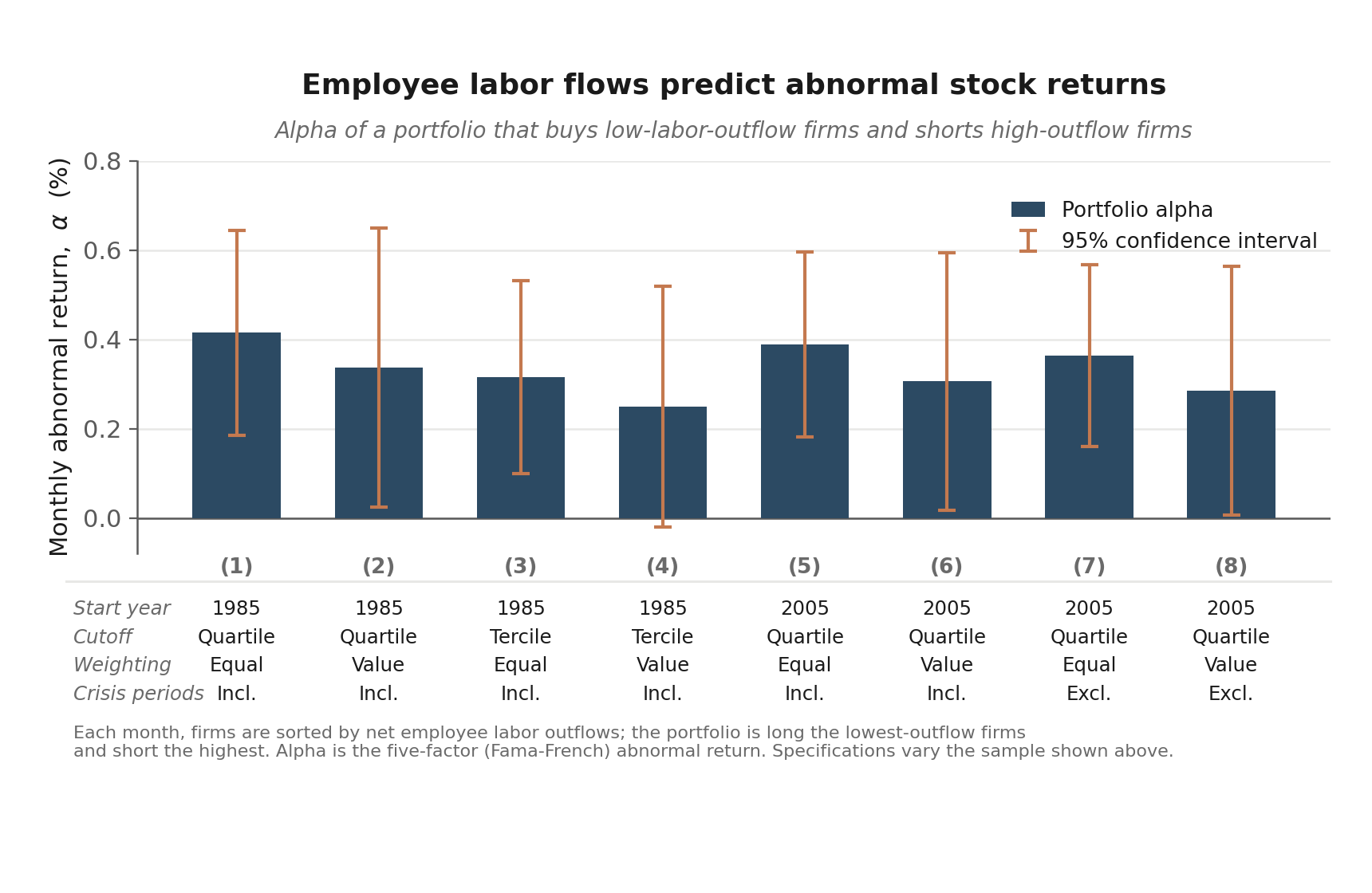
Long-short portfolio alpha by sample construction Table 2 — Calendar-Time Portfolio Analysis
Competing for Talent: Firms, Managers, and Social Networks
with Kristoph Kleiner
Review of Financial Studies 2022
+

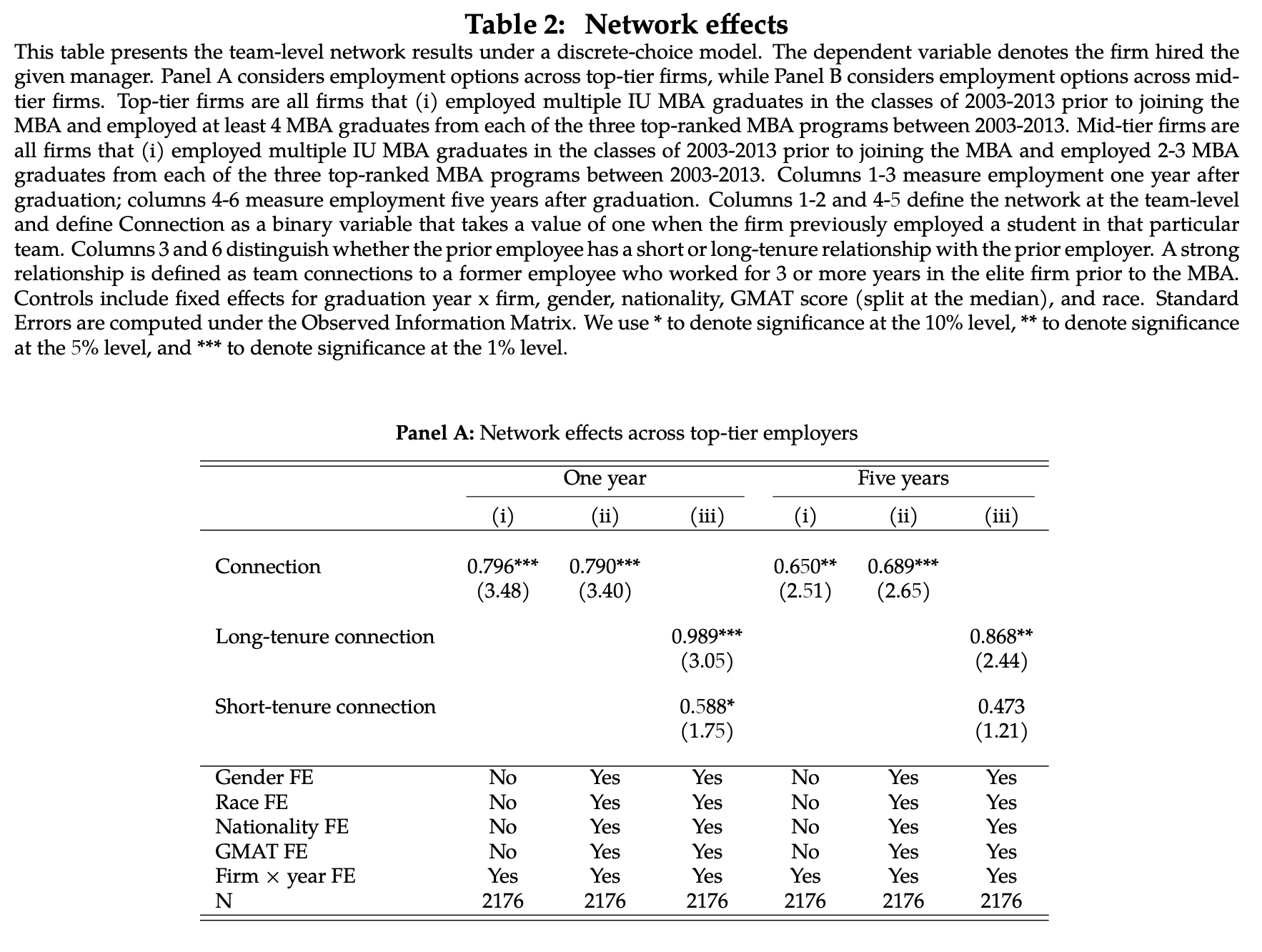
Do social networks help firms recruit talented managers? In our setting, firms are randomly connected to prospective young managers through former employees. Under a discrete-choice model, we find that networks increase the likelihood firms hire high-ability managers, while having no effect on the hiring rate of low-ability managers. Effects are greatest for nonlocal firms, strong ties, and peers living in the same neighborhood. Survey evidence suggests social networks promote recruitment by providing information about firm fundamentals to potential applicants.

Table 2: Network Effects Table 2 — Do Employee Networks Help Firms Hire Talent?
Racial Prejudice in the Workplace and Firm Boycotts
solo-authored
Journal of Political Economy Reject & Resubmit
+

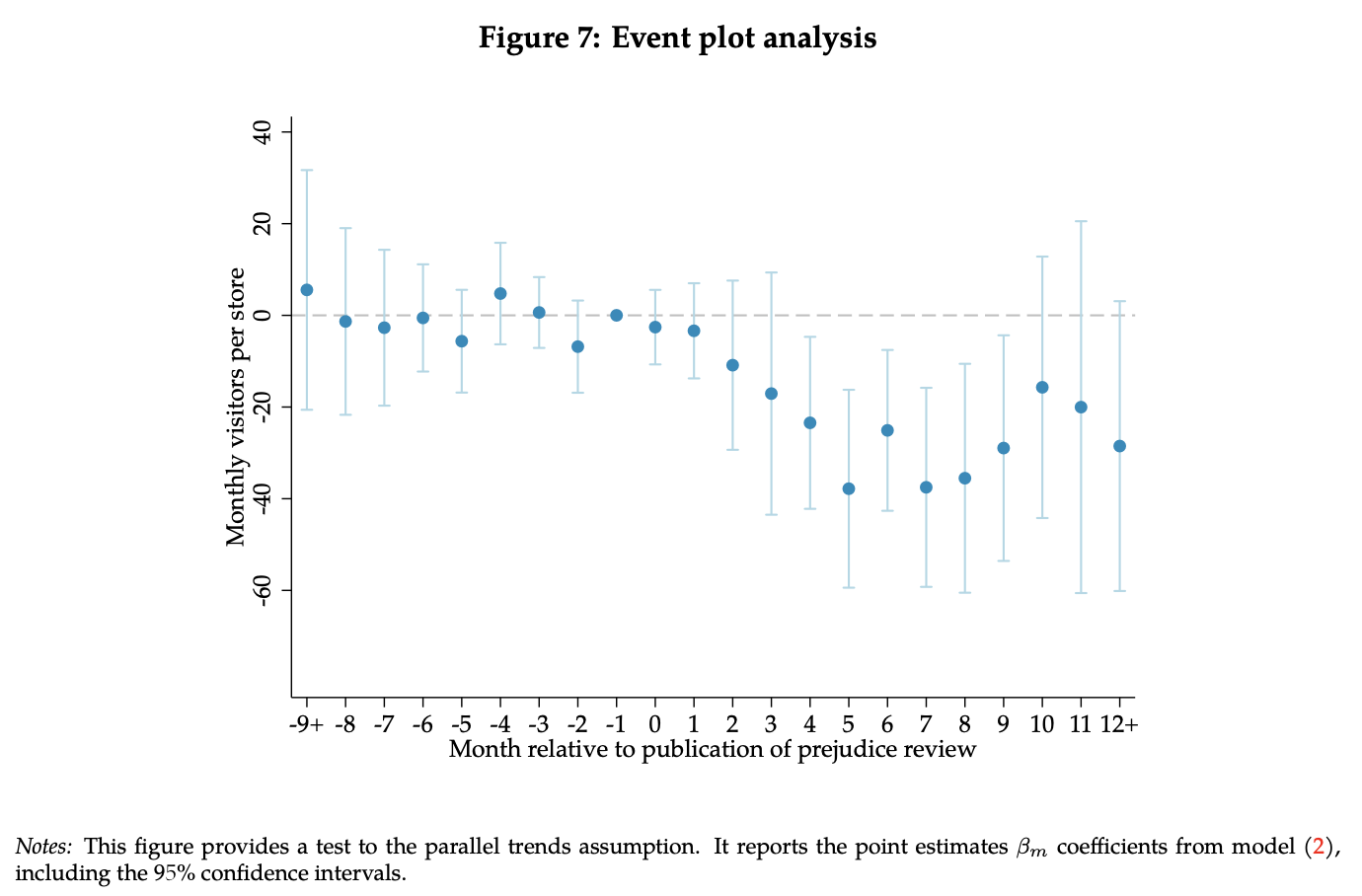
I investigate the impact of contemporary grassroots boycotts on addressing racial discriminatory practices within a firm. Introducing new data on allegations of racial prejudice in the workplace, I show that when these allegations are more (randomly) prominent to prospective employees and consumers, foot traffic declines by 4–5% at stores located in predominantly non-white, young, and low-income zip codes. Additional results show that information spreads quickly between internet platforms, shedding light on the mechanisms of a grassroots boycott. A randomized survey experiment confirms that prospective employees and consumers boycott a firm after learning about incidents of workplace racial prejudice.

Figure 7: Event plot of foot traffic Figure 7 — Event Plot of Foot Traffic
Employees Discriminating Against Firms
with Zhongchen Hu
Submitted Apr 2026
+

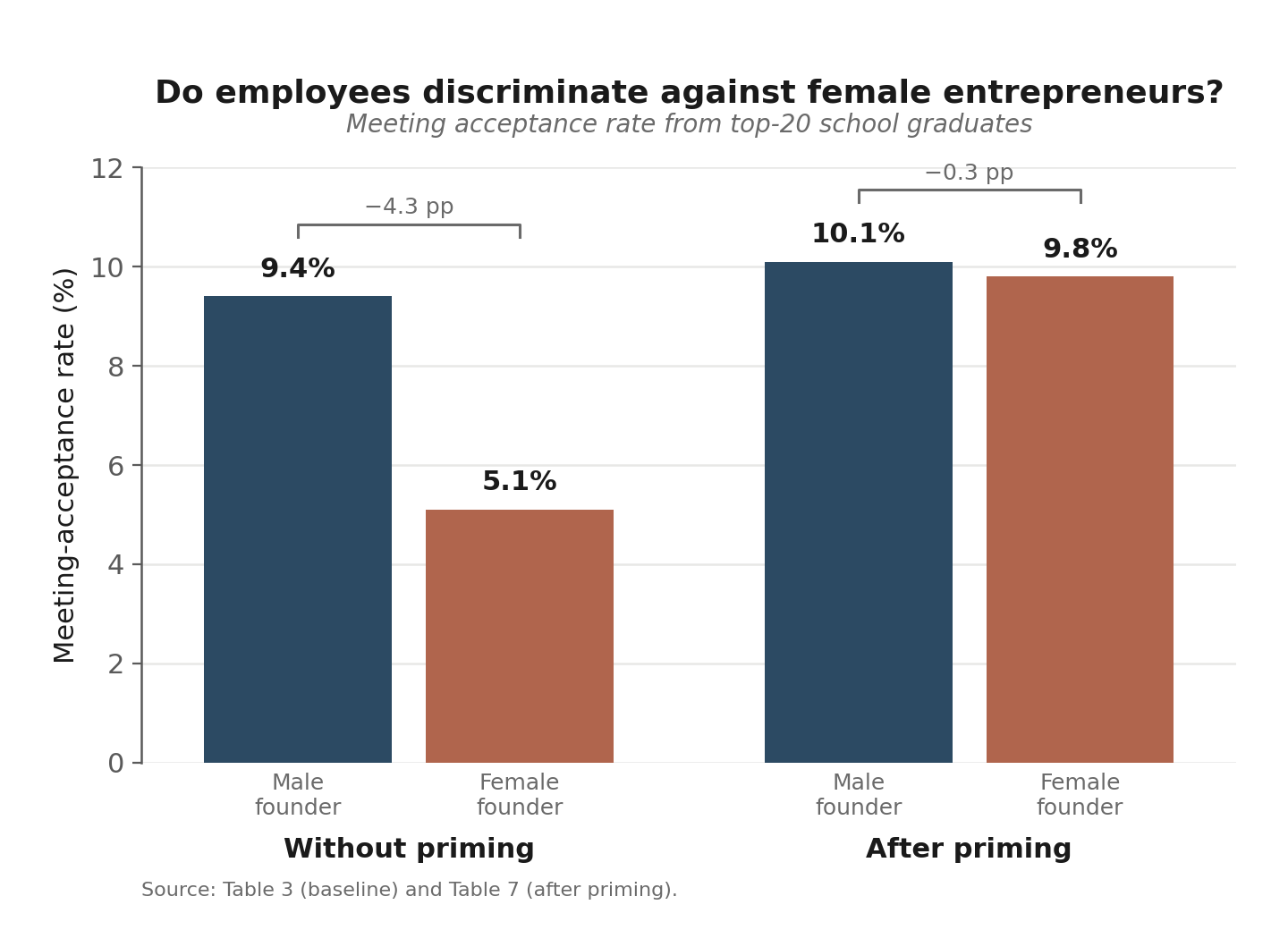
Using a large-scale field experiment, we test whether high-skill employees discriminate against female-led businesses. We build 18 high-growth startups in identical pairs differing only by founder gender. Founders email prospective employees regarding an open role and request a meeting. Male founders secure a 10% acceptance rate, while female founders receive 30–50% lower rates. This response gap is larger for individuals with better outside options. We prime respondents with information about female-targeted funding initiatives to shift beliefs about female founders’ success rates. This intervention reduces the response gap by 90%. Additional evidence suggests that employees internalize the discrimination experienced by employers.

Meeting acceptance rate by founder gender, before and after priming Table 6 — Effect of Priming

2. Real Estate & Urban Economics

The Babies of Mortgage Market Deregulation
solo-authored
Review of Financial Studies 2020
+

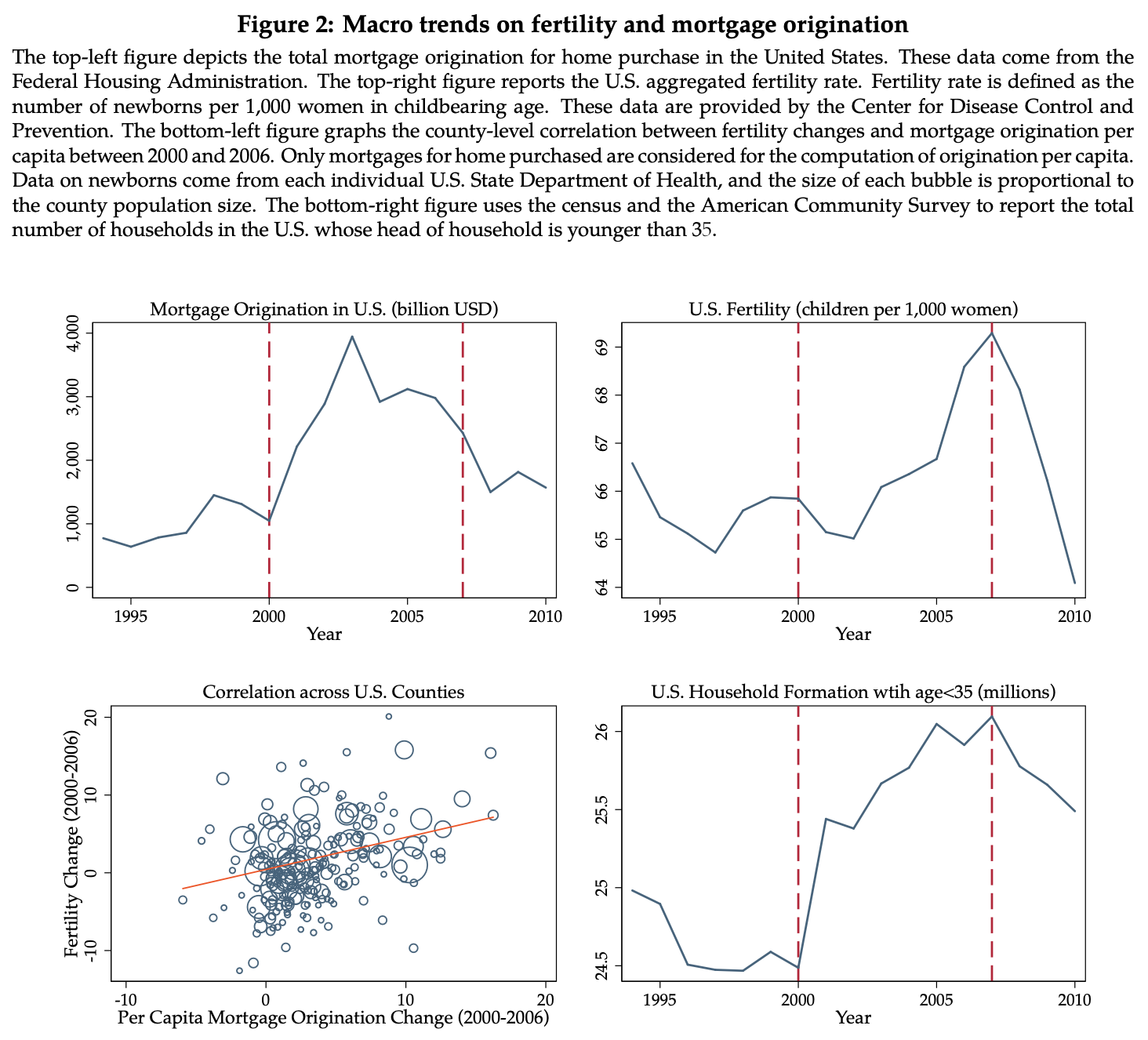
This paper documents that mortgage-market deregulation helps mitigate the risk of population aging by affecting a foundational family-level decision: the choice to have children. Using a U.S. federal regulator ruling, I show that young households fully exposed to mortgage-market deregulation increase their probability of purchasing a home and having a child by 6 percentage points. Supplemental tests reject alternative hypotheses based on income or housing-wealth growth and instead suggest that access to space is the relevant economic mechanism.

Figure 2: Macro trends on fertility and mortgage origination Figure 2 — Fertility & Mortgage Origination
Interest Rates and the Distribution of House Prices
solo-authored
Review of Economic Studies Accepted
+

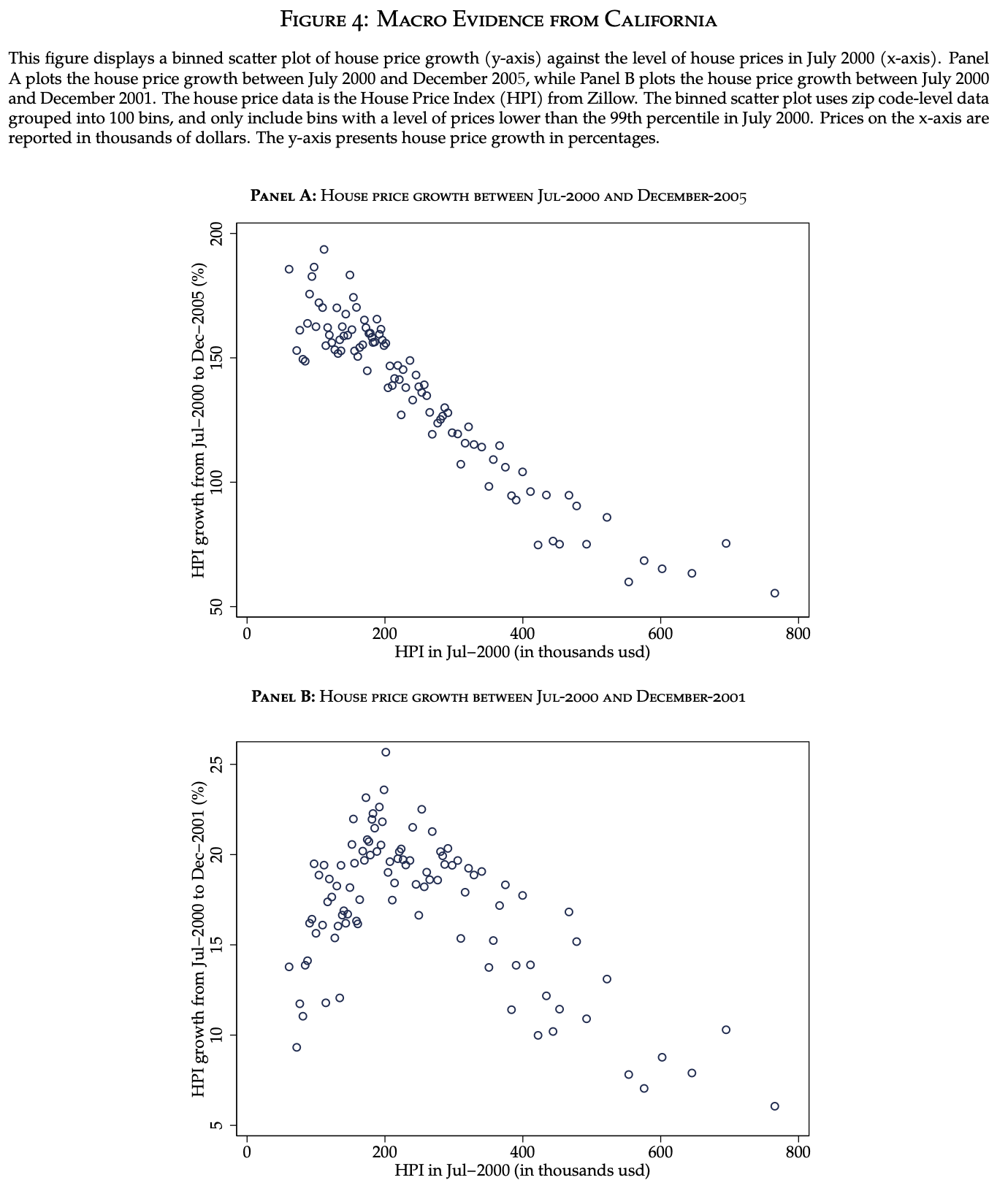
How do interest rates affect the distribution of house prices? I develop a housing-assignment framework and exploit incidental differences in the income distribution to identify the model. A one-percentage-point decline in mortgage rates causes a 6% contemporaneous increase in home values in middle-priced neighborhoods. High-priced neighborhoods experience half of this increase, while low-priced neighborhoods exhibit no change. Mortgage applications exhibit a similar pattern. The rate shocks between Jul-2000 and Dec-2001 account for a significant amount of price variation in middle-priced neighborhoods during the 2000s housing boom.

Figure 4: Macro evidence from California Figure 4 — Macro Evidence from California
Priced-Out: Rent Control, Wages, and Inequality
with Geraldo Cerqueiro, Pedro Raposo, and Derek Wenning
American Economic Journal: Economic Policy Revise & Resubmit
+

We examine whether rent control helps low-income workers access high-wage jobs and whether housing vouchers achieve similar outcomes more efficiently. Following a quasi-exogenous loss of rent control, low-income workers’ earnings decline. High-income workers are unaffected, despite being equally likely to migrate outside the city. This effect is driven by individuals without a personal vehicle who use public transit for commuting. Using a quantitative commuting model with rent control, our counterfactual analysis shows that, relative to rent control, housing vouchers reduce taxation on landlords and regional inequality among low-income workers, but only replicate welfare gains if they do not restrict mobility.

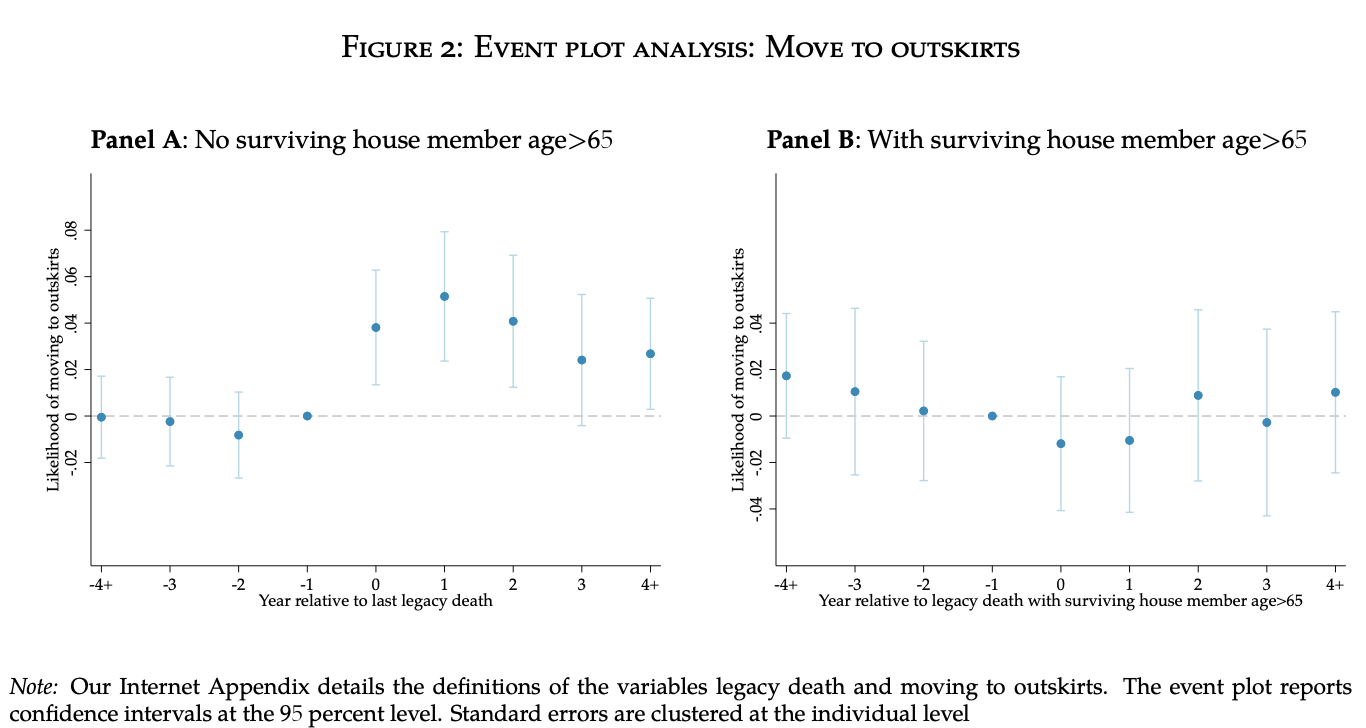
Figure 6: Welfare and labor market effects of transfer policies Figure 2 — Effect on Displacement to Outskirts
Tax Increment Financing and Business Dynamism
with Seohee Kim
Working Paper Feb 2026
+

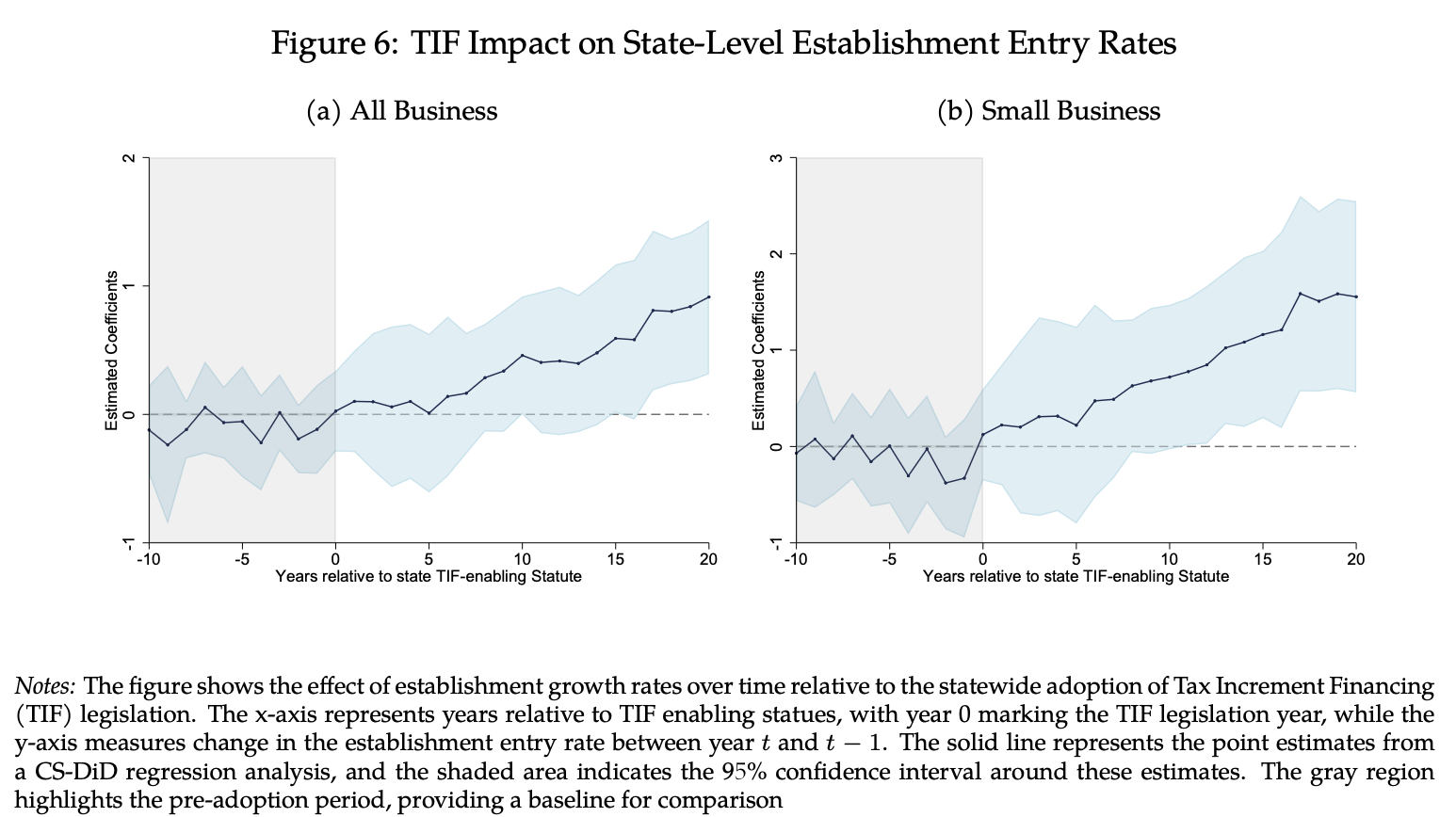
Can cities use future incremental property-tax revenue in underdeveloped areas to finance current investment and stimulate business dynamism? Exploiting the staggered rollout of Tax Increment Financing (TIF) legislation beginning in the 1960s, we find that allowing municipalities to earmark future incremental property-tax revenue for economic development increases the annual net-entry rate of small firms. This dynamism creates new jobs, reduces poverty rates, and lowers enrollment in food-assistance programs among individuals without a college degree. However, TIF also raises counties’ borrowing costs and diverts funds from other public services, generating spillover costs of approximately $221.6k per additional firm created.

Figure 6: TIF impact on state-level establishment entry rates Figure 6 — TIF and Establishment Entry

3. Entrepreneurship

Forced Entrepreneurs
with Kristoph Kleiner
Journal of Finance 2022 Brattle Group Distinguished Paper
+

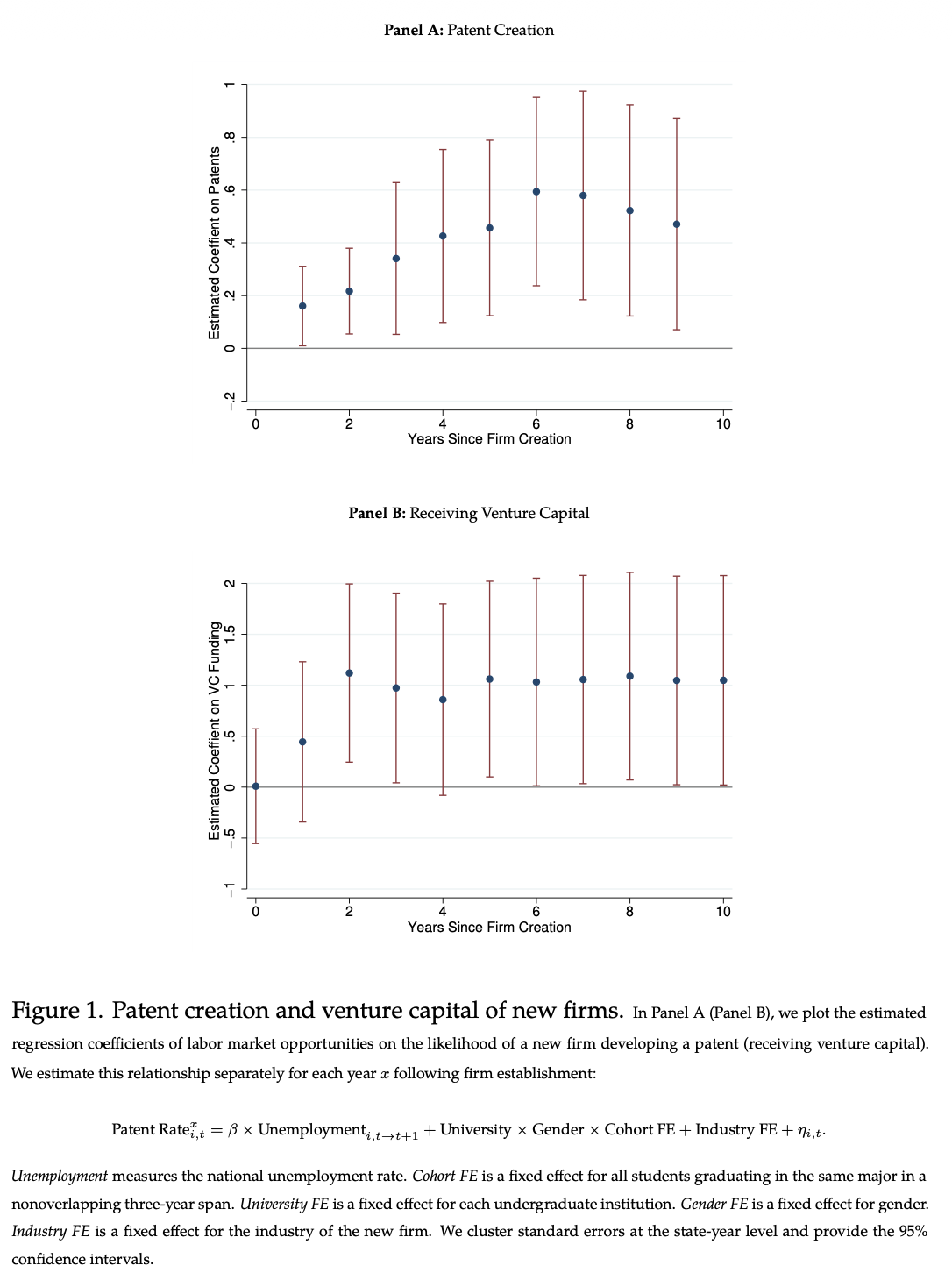
Conventional wisdom suggests labor-market declines drive workers towards temporary entrepreneurship and self-employment, lowering the quality of startups. Analyzing the employment histories of 640,000 workers, we document that graduating college during a period of high unemployment does increase entry to entrepreneurship. However, based on multiple measures of success — survival, growth, innovation, and venture-capital funding — recession-driven entrepreneurs are equal to or more capable than voluntary entrepreneurs. Labor shocks disproportionately impact workers with the greatest wage potential, and these same workers start highly successful firms. Overall, we confirm the prevalence of untapped entrepreneurial potential in the workforce, especially across the top of the income distribution.

Figure 1: Patent creation and venture capital of new firms Figure 1 — Patents and VC Funding of Forced Entrepreneurs
No Experience Necessary: The Peer Effects of Intended Entrepreneurs
with Kristoph Kleiner
Review of Finance 2024
+

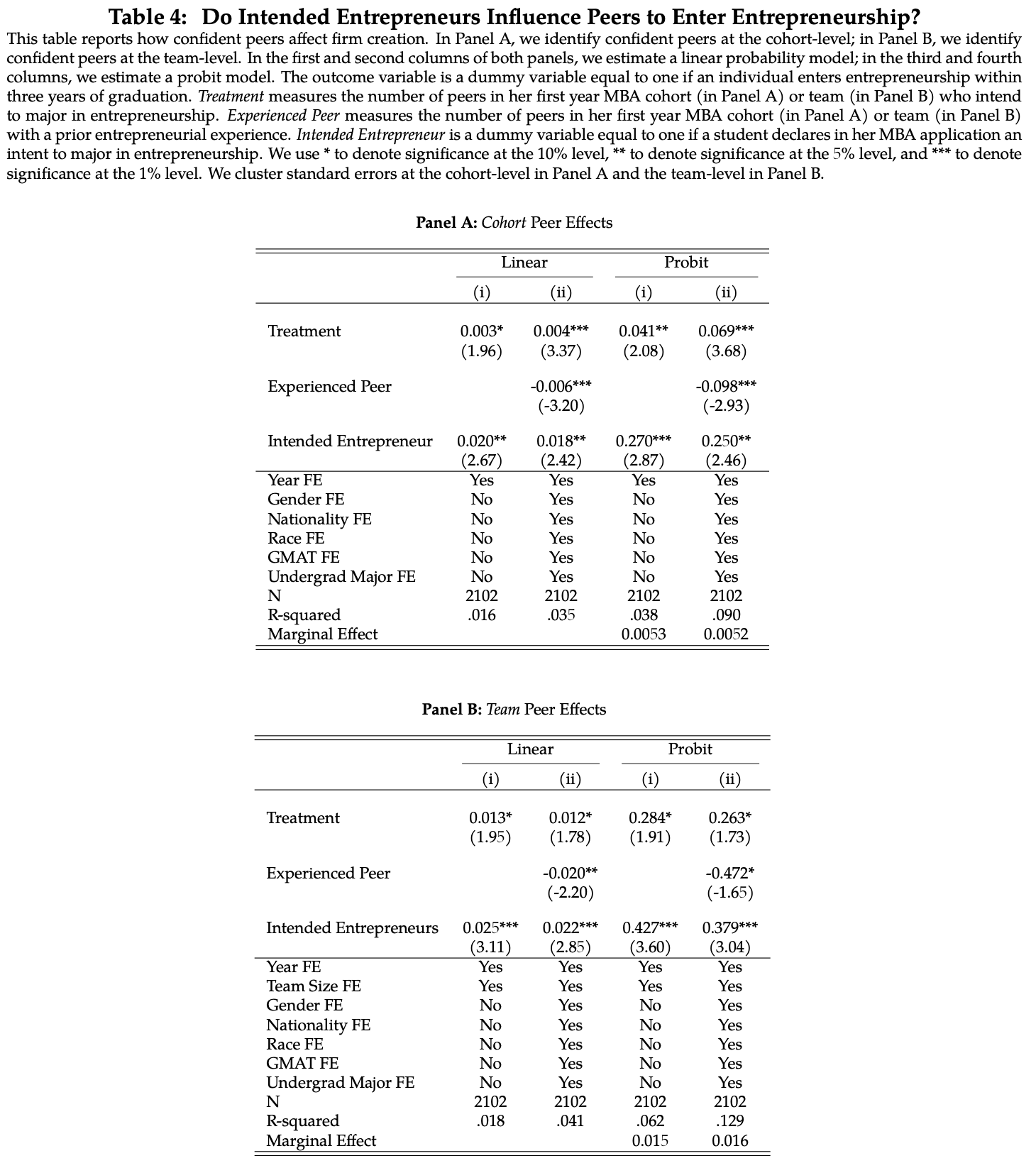
Under a randomized setting, this paper finds workers with entrepreneurial ambition — intended entrepreneurs — are (i) far more common than workers with past entrepreneurial experience and (ii) increase the rate of entrepreneurship among their peers. Peer effects are persistent, stronger for tighter networks, and extend to the decision to join a startup. Intended peers explain half of the variation in entrepreneurship rates in our sample, demonstrating that intended entrepreneurs — even those who never personally start a firm — represent a vital component of the entrepreneurial ecosystem.

Figure 4: Percent of prior and intended entrepreneurs Table 4 — Do Intended Entrepreneurs Affect Peers?
Entrepreneurs as Households
with Valentina Rutigliano
Working Paper Mar 2026
+

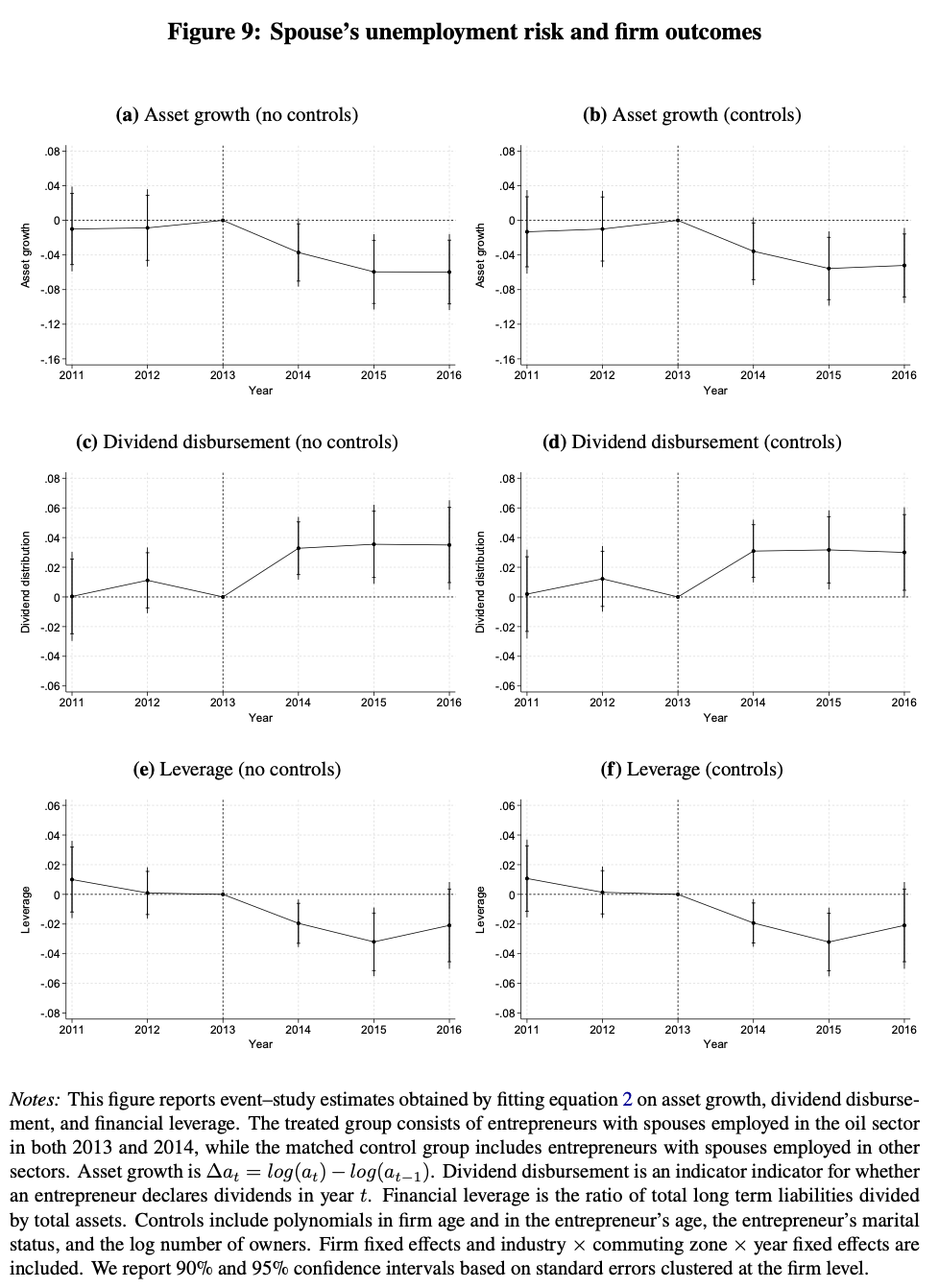
Most entrepreneurs live in households with multiple members, yet the existing academic work treats them as isolated individuals, overlooking how intra-household risk sharing may shape firm-level decisions. Using an exogenous increase in labor-income risk, we show that entrepreneurs married to exposed workers reduce firm size and leverage, and increase their demand for liquid assets. Additional empirical evidence, using proxies for risk aversion and firm riskiness, supports a precautionary-savings motive. We develop a macro model with risk-averse entrepreneurs who have heterogeneous productivity and face borrowing constraints. Relative to a conventional economy with entrepreneurs and workers as separate agents, an economy featuring entrepreneurs married to workers leads to greater concentration of capital among the most productive entrepreneurs. Following a negative productivity shock, concentration further increases, but total output declines relative to a conventional economy.

Figure 9: Spouse's unemployment risk and firm outcomes Figure 9 — Spouse’s Unemployment Risk and Firm Outcomes

4. Other Publications

Reproducibility in Management Science
Member of the Reproducibility Collaboration Team
Management Science 2023
+

With the help of more than 700 reviewers, we assess the reproducibility of nearly 500 articles published in Management Science before and after the introduction of a new Data and Code Disclosure policy in 2019. When considering only articles for which data accessibility and hardware/software requirements were not an obstacle, the results of more than 95% of articles under the new disclosure policy could be fully or largely computationally reproduced. However, for 29% of articles, at least part of the dataset was not accessible to the reviewer. Considering all articles in our sample reduces the share of reproduced articles to 68%. These figures represent a significant increase compared with the period before the introduction of the disclosure policy, where only 12% of articles voluntarily provided replication materials, of which 55% could be (largely) reproduced. Our findings highlight the importance of journal code and data disclosure policies and suggest potential avenues for enhancing their effectiveness.